Pages

Thursday, July 23, 2015

NASA finds ‘another Earth’ in Milky Way and it's called Earth 2.0

Earth 2.0 or Kepler 452b is so like Earth that Nasa believes it is possible that life once inhabited the planet. 


Nasa has found a twin Earth orbiting a star like the Sun in the Milky Way which scientists say ‘would feel a lot like home.’


Kepler 452b - which has been dubbed Earth 2.0 - is six billion years old, has a 385 day year and orbits its star at the same distance as us. It is 1,400 light-years away in the constellation Cygnus.


It is believed to be rocky, with active volcanoes and is so like Earth that Nasa believes it is possible that life once inhabited the planet.


Scientists said that the sunshine is so similar that plants could survive if taken to Kepler 452b.


But because it is 1.5 billion years older, scientists say it gives a ‘peek into a crystal ball showing a possible future for Earth’ as it reaches a point where it is no longer habitable.

“If Kepler 452b is indeed a rocky planet, its location could mean that it is just entering a runaway greenhouse phase of its climate history,” said Doug Caldwell, a SETI Institute scientist working on the Kepler mission.

“The increasing energy from its aging sun might be heating the surface and evaporating any oceans. The water vapour would be lost from the planet forever.

“Kepler 452b could be experiencing now what the Earth will undergo more than a billion years from now, as the Sun ages and grows brighter.”


The Kepler spacecraft has been looking for signs of new worlds outside the Solar System since May 2009, and has so far found more than 4,000 planets in the so-called ‘Goldilocks Zone’ – neither too hot, nor too cold to sustain life.

On Thursday Nasa announced they had found 500 new possible planets to add to the 4,175 already found by the telescope, and 12 were ‘Earth-like.’ But Kepler 452b is the first of the 12 to be confirmed as a planet and Nasa said it was the 'closest' to Earth that has ever been seen.

It is 60 percent larger in diameter than Earth and is considered a super-Earth-size planet.

“Today the Earth is a little less lonely because there is a new kid on the block,” said Jon Jenkins, Kepler data analysis lead at NASA's Ames Research Center in Moffett Field, California.

"If you travelled to this star with an arkful of plants...the plants would photosynthesise just perfectly fine. It would feel a lot like home from the standpoint of the sunshine.

“It is six billion years old. That is considerable opportunity for life to arise on its surface and its oceans should all the necessary conditions for life have appeared on this planet.

“This is the closest thing that we have to another planet like the Earth. And the Earth follows nearly in the footsteps of its older cousin and will be there in 1.5 billion years time.”


The area of the Milky Way in which Kepler is looking Credit: NASA


The discovery gives new hope that alien civilisations may exist beyond the Solar System. Earlier this week Professor Stephen Hawking and the Astronomer Royal Lord Martin Rees announced they were joining a $100 million project to seek out signs of extra-terrestrial intelligence in the Milky Way.

"We won't be going to this planet but our children's children's children might be," said Jeff Coughlin, Kepler research scientist at SETI Institute in Mountain View, California "It's a very long term goal but a very exciting one."

Kepler’s task is to look for rocky planets between half and twice the size of Earth where water could still exist on the surface.

Since liquid water is critical to life on Earth, many scientists believe the search for extra-terrestrial life should focus on planets where liquid water occurs.

The size of the planet also means it has enough gravity to pull in gases like hydrogen and helium to form an atmosphere.

The space observatory detects planets as their orbits cross in front of their star and cause a very tiny but periodic dimming of the star’s brightness.

Nasa is also trying to determine the fraction of the hundreds of billions of stars in our galaxy that might have such planets.

“We’re trying to answer fundamental questions, Where do we come from, where are we going? What’s the future of our Solar System,” John Grunsfeld, associate administrator for NASA's Science Mission Directorate .

“We’re going to take one small step in answering that question today.”

Thursday, July 9, 2015

Tuesday, July 7, 2015

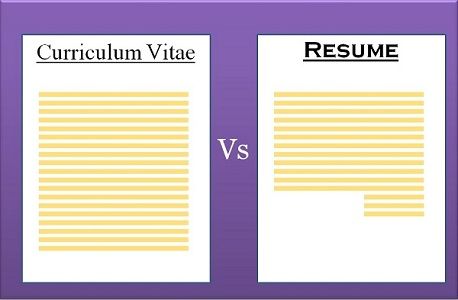
Difference between CV and Resume...........

With renovation in world, people become educated and smart but still there are few things people are unaware. Therefore today will talk about an important issue facing by beginners especially. You might be thinking that what it is. Yes there is an issue people are unaware that is difference between resume and CV. Now day’s even adults and working people do not know the exact difference. However, for understanding the difference, first of all everyone should know the definition of resume and CV.


CV Vs Resume


These two terms are entirely different from each other. People should know the difference between CV and resume.


What is CV? 


CV is basically called Curriculum Vitae.


  • CV basically provides a complete summary of your educational background and extra achievements.
  • It also contains your different experiences, researches, awards, honors, presentations and speeches.
  • There is no word limit in CV.


CV used for what?


Normally fresh graduates and job seeker use CV. Moreover, purpose of CV is to apply for any internship, scholarship and job. It can also be called an application by a person who is applying for something.


What Resume means?


  • Resume basically means complete information about your professional experiences.
  • There is word or page limit in resume. Like you cannot extend from two pages.
  • Precisely, resume is a way to show your capabilities in a proficient manner.


Resume used for what? 


It is used to apply for any industry, company, organization and governmental job. Through using resume anybody can show inner talent by offering good impression of personality. Main reason of resume is to get a reliable and good job.


Difference between CV and Resume: 


The major difference between CV and Resume is that person has to alter details for different position in Resume but in CV, it remains the similar. Moreover, in CV everything listed in a chain or we can say sequence but in Resume, you have to add your professional achievements and information in different manner without following any chronological order. Furthermore, CV has entire record of your educational career and your information. On the other hand, in Resume only target information is existed. No format is followed in Resume but in CV you have to follow certain format. CV can be prolonged but resume cannot be. In addition, Canada, America UK, South Africa, New Zealand, Ireland, is the countries where it is preferable to for CV instead of Resume. However, in India and Australia these two terms are transposable. People can also get differentiation information by taking help from internet as now people getting informed day by day.


So are you ready for a better life?


If you really want to achieve few goals in your life then make sure to know the dissimilarity between these two terms. Otherwise, you are unacquainted from a major distinction and for having a first-class job, cleverness and brain power both matter. So live a life with self-reliance and information by attaining your goals of life.


Sunday, June 28, 2015

99 Facts about DNA. How many do you know?

Facts About DNA
  1. DNA stands for deoxyribonucleic acid.
  2. DNA is part of our definition of a living organism.
  3. DNA is found in all living things.
  4. DNA was first isolated in 1869 by Friedrich Miescher.
  5. James Watson and Francis Crick figured out the structure of DNA.
  6. DNA is a double helix.
  7. The structure of DNA can be likened to a twisted ladder.
  8. The rungs of the ladder are made up of “bases”
  9. Adenine (A) is a base.
  10. Thymine (T) is a base.
  11. Cytosine (C) is a base
  12. Guanine (G) is a base.
  13. A always pairs with T in DNA.
  14. C also pairs with G in DNA.
  15. The amount of A is equal to the amoun tof T, same for C and G.
  16. A+C = T+G
  17. Hydrogen bonds hold the bases together.
  18. The sides of the DNA ladder is made of sugars and phosphate atoms.
  19. Bases attached to a sugar; this complex is called a nucleoside.
  20. Sugar + phosphate + base = nucleotide.
  21. The DNA ladder usually twists to the right.
  22. There are many conformations of DNA: A-DNA, B-DNA, and Z-DNA are the only ones found in nature.
  23. Almost all the cells in our body have DNA with the exception of red blood cells.
  24. DNA is the “blueprint” of life.
  25. Chromosomal or nuclear DNA is DNA found in the nucleus of cells.
  26. Humans have 46 chromosomes.
  27. Autosomal DNA is part of chromosomal DNA but does not include the two sex chromsomes – X and Y.
  28. One chromosome can have as little as 50 million base pairs or as much as 250 million base pairs.
  29. Mitochondrial DNA (mtDNA) is found in the mitochondria.
  30. mtDNA is only passed from the mother to the child because only eggs have mitochondria, not sperm.
  31. There’s a copy of our entire DNA sequence in every cell of our body with one exception.
  32. Our entire DNA sequence is called a genome.
  33. There’s an estimated 3 billion DNA bases in our genome.
  34. One million bases (called a megabase and abbreviated Mb) of DNA sequence data is roughly equivalent to 1 megabyte of computer data storage space.
  35. Our entire DNA sequence would fill 200 1,000-page New York City telephone directories.
  36. A complete 3 billion base genome would take 3 gigabytes of storage space.
  37. If unwound and tied together, the strands of DNA in one cell would stretch almost six feet but would be only 50 trillionths of an inch wide.
  38. In humans, the DNA molecule in a non-sex cell would have a total length of 1.7 metres.
  39. If you unwrap all the DNA you have in all your cells, you could reach the moon 6000 times!
  40. Our sex cells–eggs and sperm–have only half of our total DNA.
  41. Over 99% of our DNA sequence is the same as other humans’.
  42. DNA can self-replicate using cellular machinery made of proteins.
  43. Genes are made of DNA.
  44. Genes are pieces of DNA passed from parent to offspring that contain hereditary information.
  45. The average gene is 10,000 to 15,000 bases long.
  46. The segment of DNA designated a gene is made up of exons and introns.
  47. Exons have the code for making proteins.
  48. Introns are intervening sequences sometimes called “junk DNA.”
  49. Junk DNA’s function or lack thereof is a source of debate.
  50. Part of “junk DNA” help to regulate the genomic activity.
  51. There are an estimated 20,000 to 25,000 genes in our genome.
  52. In 2000, a rough draft of the human genome (complete DNA sequence) was completed.
  53. In 2003, the final draft of the human genome was completed.
  54. The human genome sequence generated by the private genomics company Celera was based on DNA samples collected from five donors who identified themselves only by race and sex.
  55. If all the DNA in your body was put end to end, it would reach to the sun and back over 600 times (100 trillion times six feet divided by 92 million miles).
  56. It would take a person typing 60 words per minute, eight hours a day, around 50 years to type the human genome.
  57. If all three billion letters in the human genome were stacked one millimeter apart, they would reach a height 7,000 times the height of the Empire State Building.
  58. DNA is translated via cellular mechanisms into proteins.
  59. DNA in sets of 3 bases, called a codon, code for amino acids, the building blocks of protein.
  60. Changes in the DNA sequence are called mutations.
  61. Many thing can cause mutations, including UV irradiation from the sun, chemicals like drugs, etc.
  62. Mutations can be changes in just one DNA base.
  63. Mutations can involve more than one DNA base.
  64. Mutations can involve entire segments of chromosomes.
  65. Single nucleotide polymorpshisms (SNPs) are single base changes in DNA.
  66. Short tandem repeats (STRs) are short sequences of DNA repeated consecutively.
  67. Some parts of the DNA sequence do not make proteins.
  68. Genes make up only about 2-3% of our genome.
  69. DNA is affected by the environment; environmental factors can turn genes on and off.
  70. There are many ways you can analyze your DNA using commercially available tests.
  71. Paternity tests compare segments of DNA between the potential father and child.
  72. There are other types of relationship testing that compares DNA between siblings, grandparents and grandchild, etc.
  73. DNA tests can help you understand your risk of disease.
  74. A DNA mutation or variation may be associated with a higher risk of a number of diseases, including breast cancer.
  75. DNA tests can help you understand your family history aka genetic genealogy.
  76. DNA tests can help you understand your ethnic make-up.
  77. DNA can be extracted from many different types of samples: blood, cheek cells, urine.
  78. DNA can be stored either as cells on a cotton swab, buccal brush, or frozen blood or in extracted form.
  79. In forensics, DNA analysis usually looks at 13 specific DNA markers (segments of DNA).
  80. The odds that two individuals will have the same 13-loci DNA profile is about one in one billion.
  81. A DNA fingerprint is a set of DNA markers that is unique for each individual except identical twins.
  82. Identical twins share 100% of their genes.
  83. Siblings share 50% of their genes.
  84. A parent and child share 50% of their genes.
  85. You can extract DNA at home from fruit and even your own cheek cells.
  86. DNA is used to determine the pedigree for livestock or pets.
  87. DNA is used in wildlife forensics to identify endangered species and people who hunt them (poachers).
  88. DNA is used in identify victims of accidents or crime.
  89. DNA is used to exonerate innocent people who’ve been wrongly convicted.
  90. Many countries, including the US and UK, maintain a DNA database of convicted criminals.
  91. The CODIS databank (COmbined DNA Index System) is maintained by the BI and has DNA profiles of convicted criminals.
  92. Polymerase chain reaction (PCR) is used to amplify a sample of DNA so that there are more copies to analyze.
  93. We eat DNA every day.
  94. DNA testing is used to authenticate food like caviar and fine wine.
  95. DNA is used to determine the purity of crops.
  96. Genetically modified crops have DNA from another organism inserted to give the crops properties like pest resistance.
  97. Dolly the cloned sheep had the same nuclear DNA as its donor mom but its mitochondrial DNA came from from the egg mom. (Does that make any sense?)
  98. People like to talk about DNA even if it bears no relation to science or reality.
  99. A group of bloggers who write regularly about DNA and genetics have banded to gether to form The DNA Network.

Friday, June 26, 2015

Bacteriophage WINS !!!!


#Bacteriophage_Therapy     #Phage_Therapy    #E.coli_VS_Bacteriophage

#Phage_Therapy_in_Nepal


Tuesday, June 23, 2015

Extra DNA Base Discovered

By  | June 23, 2015

An epigenetic variant of cytosine is stable in the genomes of living mice, suggesting a possible expansion of the DNA alphabet.

An epigenetic mark known as 5-formylcytosine (5fC) may be more than a transitory state that helps regulate gene expression. According to a study published yesterday (June 22) in Nature Chemical Biology, 5fC is stable in the mouse genome and may represent a fifth nucleotide in the DNA alphabet.

“It had been thought this modification was solely a short-lived intermediate, but the fact that we’ve demonstrated it can be stable in living tissue shows that it could regulate gene expression and potentially signal other events in cells,” coauthor Shankar Balasubramanian of the Cancer Research UK Cambridge Institute said in a press release.

While the function of the modified base—essentially a methylated cytosine with added oxygen—remains unclear, its position within the genome points to a role in gene expression. “This modification to DNA is found in very specific positions in the genome—the places which regulate genes,” lead author Martin Bachman, who conducted the research while at the University of Cambridge, said in the release. “In addition, it’s been found in every tissue in the body—albeit in very low levels.” High-resolution mass spectrometry revealed 5fC to be most common in the mouse brain, but even there it was present at only 10 parts per million or less.

But when the researchers enriched cultures of mouse cells or mice’s diets with stable isotopes of carbon and hydrogen, they found no uptake into 5fC bases, suggesting the modification is stable.

“If 5fC is present in the DNA of all tissues, it is probably there for a reason,” added Balasubramanian. “This will alter the thinking of people in the study of development and the role that these modifications may play in the development of certain diseases.”


Source: http://www.the-scientist.com/?articles.view/articleNo/43358/title/Extra-DNA-Base-Discovered/